
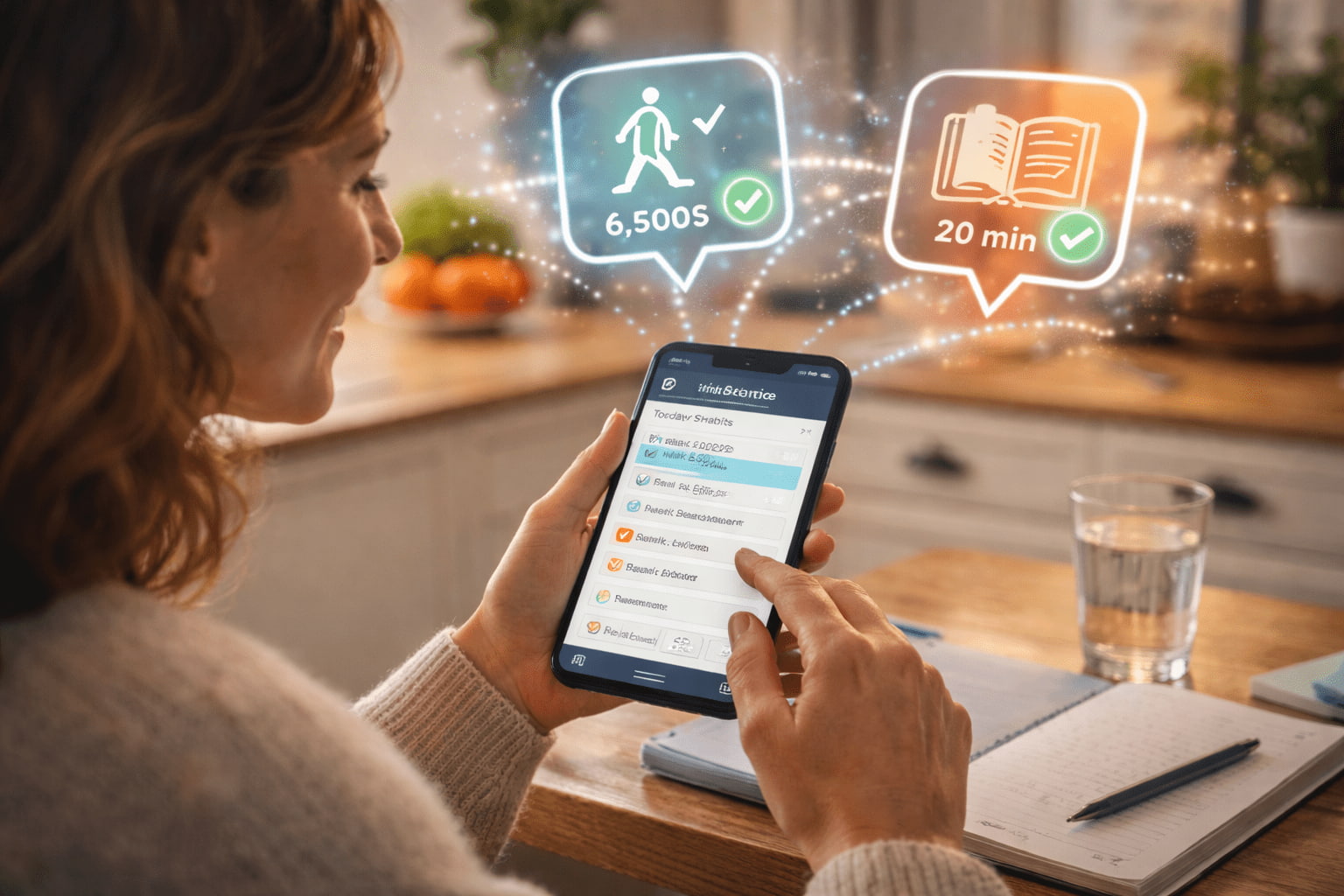
Building good habits is one of the most common personal goals. Exercising regularly, eating better, sleeping well, studying consistently, or simply staying organized sounds simple in theory — but in practice, it’s difficult to maintain consistency. Artificial Intelligence (AI) has become a practical support tool that helps ordinary people build and maintain better habits without pressure or complexity.
AI does not create discipline for you, and it does not force behavior changes. Instead, it helps by creating structure, reducing forgetfulness, and offering gentle guidance, making habit-building more achievable in daily life.
Why Building Habits Is So Difficult
Most people fail to maintain habits not because they lack motivation, but because of everyday obstacles such as:
- Forgetting to follow through
- Setting unrealistic goals
- Losing motivation over time
- Feeling overwhelmed by too many changes
- Lack of feedback or progress visibility
AI helps reduce these barriers by supporting consistency rather than perfection.
What AI Means in Habit Formation
In habit-building tools, AI is used to:
- Track behavior patterns
- Send timely reminders
- Adapt goals to real-life routines
- Provide feedback based on progress
These tools focus on small, repeatable actions instead of dramatic changes.
AI Helps Turn Intentions into Action
Many habits fail at the “remembering” stage.
Smart Reminders
AI-powered reminders:
- Adjust timing based on user behavior
- Avoid excessive notifications
- Trigger reminders when users are most likely to act
This increases the chance of follow-through without creating annoyance.
Personalized Goals Make Habits Easier
Generic goals often don’t work for everyone.
AI helps by:
- Suggesting realistic targets
- Adjusting goals based on progress
- Reducing goals temporarily during busy periods
This flexibility helps people stay consistent even when life gets hectic.
AI Helps Track Progress Automatically
Tracking habits manually can be tiring.
AI-powered tools can:
- Track activity automatically
- Identify streaks and patterns
- Show progress visually
Seeing progress, even small improvements, increases motivation.
AI Reduces All-or-Nothing Thinking
Many people abandon habits after missing a day.
AI helps prevent this by:
- Encouraging recovery instead of guilt
- Highlighting long-term trends instead of single failures
- Reinforcing consistency over perfection
This mindset shift is crucial for sustainable habits.
AI Supports Health-Related Habits
Health habits are among the most common goals.
AI supports:
- Physical activity routines
- Sleep consistency
- Hydration reminders
- Balanced daily schedules
These tools adapt suggestions based on user behavior rather than strict rules.
AI Helps Build Learning and Productivity Habits
Habits are not limited to health.
AI also supports:
- Daily reading
- Study routines
- Work focus sessions
- Skill development
By organizing time and reducing distractions, AI helps habits fit naturally into daily routines.
AI Encourages Small, Sustainable Changes
Big changes often fail because they feel overwhelming.
AI tools focus on:
- Small daily actions
- Gradual improvement
- Long-term consistency
These micro-habits are easier to maintain and often lead to meaningful results over time.
AI Adapts Habits to Real Life
Life is unpredictable, and rigid systems fail.
AI adapts by:
- Recognizing changes in routine
- Adjusting expectations
- Offering alternative actions
This flexibility keeps habits alive during busy or stressful periods.
AI Helps Reduce Decision Fatigue
Deciding when and how to act can block habit formation.
AI reduces this by:
- Automating timing
- Suggesting next steps
- Reducing daily decision-making
Less friction means higher consistency.
Emotional Support Without Pressure
AI habit tools:
- Don’t judge
- Don’t criticize
- Don’t compare
They offer neutral feedback, which helps people stay engaged without emotional pressure.
Common Concerns About AI and Habit-Building
Some people worry that AI:
- Creates dependency
- Reduces self-discipline
- Feels impersonal
In practice, AI supports habit formation, but users remain fully in control. Habits still belong to the individual.
What AI Does Not Replace in Habit Formation
AI does not replace:
- Personal motivation
- Values and priorities
- Long-term commitment
It supports behavior — it doesn’t create purpose.
How Ordinary People Can Start Using AI for Better Habits
Simple ways to start:
- Use one habit at a time
- Enable smart reminders
- Track progress visually
- Adjust goals when needed
Starting small increases success.
Artificial Intelligence Makes Habit-Building More Realistic
Artificial Intelligence does not promise instant transformation. What it offers is support, structure, and consistency.
For ordinary people, AI in habit-building is not about optimization or perfection. It is about making good habits easier to start — and easier to maintain — in real life.
By reducing forgetfulness, lowering pressure, and adapting to everyday routines, AI helps turn good intentions into sustainable habits that fit naturally into daily life.