
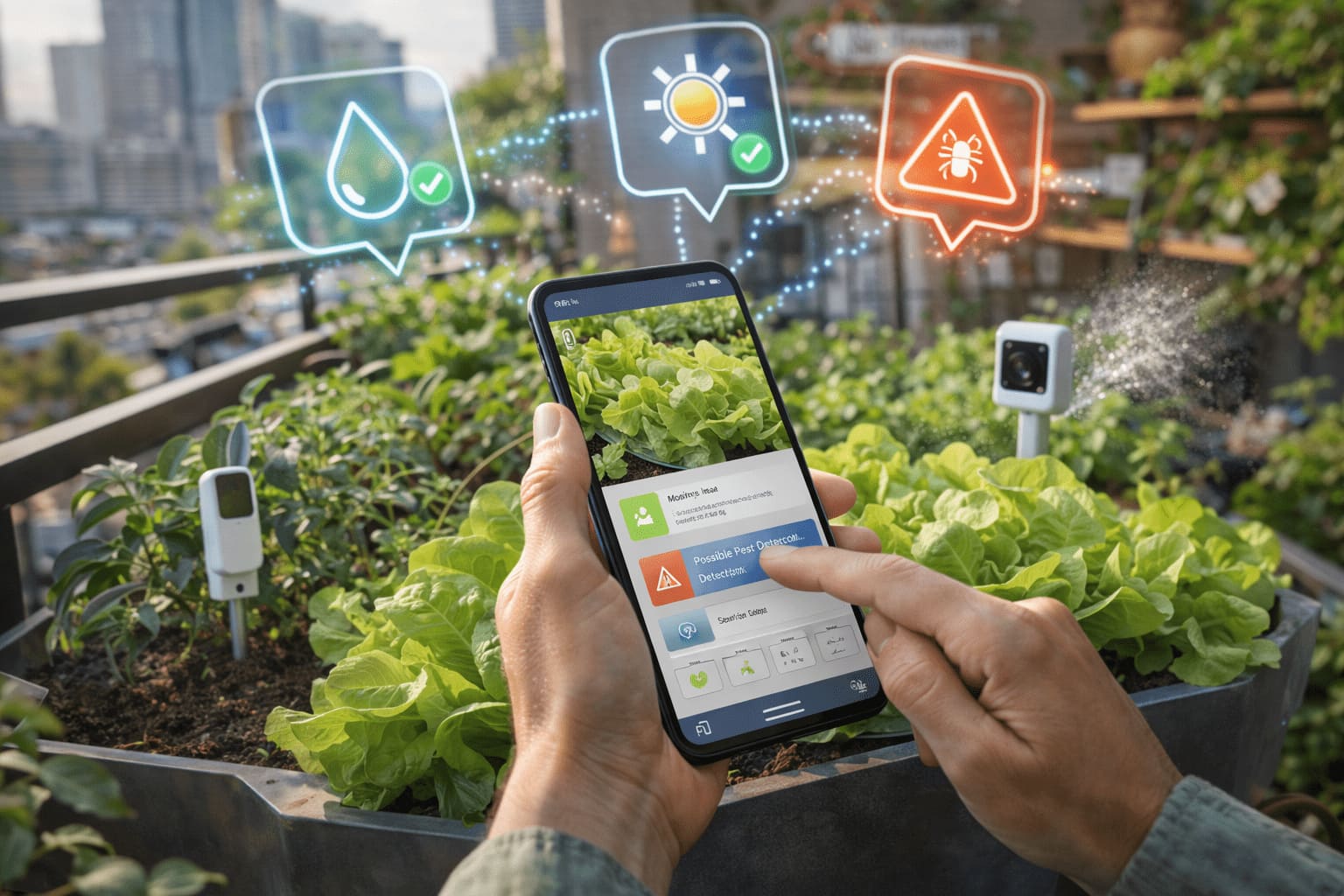
Growing food in cities or at home has become more popular in recent years. From small balconies and backyards to community gardens and urban farms, more people are trying to grow vegetables, herbs, and plants in limited spaces. Artificial Intelligence (AI) is quietly helping make this process easier, more efficient, and more accessible for ordinary people.
AI in agriculture is not limited to large farms or industrial operations. It is increasingly present in small-scale, urban, and home agriculture, supporting better decisions, reducing waste, and helping people grow healthier plants with less effort. This article explains how AI is used in everyday agriculture in a simple and practical way.
Why Urban and Home Agriculture Can Be Challenging
Growing plants at home or in cities comes with common difficulties:
- Limited space
- Unpredictable weather
- Lack of experience
- Overwatering or underwatering
- Pest and disease issues
Many beginners fail not because they lack interest, but because they lack guidance. AI helps reduce guesswork and provides practical support.
What Artificial Intelligence Looks Like in Everyday Agriculture
In small-scale agriculture, AI usually appears as:
- Mobile apps
- Smart sensors
- Automated watering systems
- Monitoring tools
Most of these solutions are designed for non-experts and require minimal setup.
AI Helps Monitor Plant Health
One of the most useful applications of AI is plant monitoring.
Identifying Plant Problems
AI-powered apps can:
- Analyze photos of plants
- Identify signs of disease or nutrient deficiency
- Suggest corrective actions
This helps beginners detect problems early instead of guessing what went wrong.
Growth Tracking
Some tools track plant growth over time, helping users understand whether their plants are developing properly.
Smart Watering Systems Reduce Waste
Watering is one of the most common challenges in home gardening.
Automated Irrigation
AI-powered irrigation systems:
- Adjust watering based on soil moisture
- Consider weather forecasts
- Prevent overwatering
This is especially useful in urban areas where water conservation matters.
Practical Benefits
Smart watering:
- Saves water
- Keeps plants healthier
- Reduces daily maintenance
AI Helps Choose the Right Plants
Choosing the wrong plant for a space is a common mistake.
AI tools help by:
- Analyzing location and sunlight
- Considering climate conditions
- Suggesting suitable plants
This improves success rates for balconies, small gardens, and indoor spaces.
Artificial Intelligence and Weather Awareness
Weather changes affect plant health significantly.
AI systems:
- Track local weather patterns
- Predict temperature changes
- Send alerts about frost, heat, or storms
This allows gardeners to protect plants in advance.
AI Supports Indoor and Vertical Gardening
Indoor and vertical gardens are common in cities.
Light and Environment Control
AI helps manage:
- Artificial lighting schedules
- Temperature
- Humidity levels
This creates stable growing conditions even without natural sunlight.
Automated Adjustments
Systems can adjust conditions automatically, reducing daily effort.
AI Helps with Pest Detection and Prevention
Pests are a major concern in small gardens.
AI tools can:
- Identify pests from images
- Suggest eco-friendly solutions
- Track recurring issues
This avoids excessive use of chemicals and supports healthier growing practices.
AI Makes Gardening More Beginner-Friendly
Many people avoid gardening because they think it’s complicated.
AI simplifies the process by:
- Providing step-by-step guidance
- Sending reminders for care tasks
- Offering personalized advice
This lowers the barrier for beginners.
Supporting Sustainable Practices with AI
Sustainability is an important part of urban agriculture.
AI supports sustainability by:
- Reducing water waste
- Optimizing resource use
- Preventing unnecessary plant loss
Small improvements across many households make a significant environmental impact.
AI in Community and Shared Gardens
Community gardens also benefit from AI tools.
AI helps by:
- Coordinating watering schedules
- Tracking shared resources
- Monitoring overall garden health
This improves collaboration and reduces conflicts.
Common Concerns About Using AI in Gardening
Some people worry that AI:
- Removes the “natural” aspect of gardening
- Makes the process too technical
In reality, AI does not replace the human connection with plants. It simply supports better care and understanding.
What AI Does Not Replace in Gardening
AI does not replace:
- Observation
- Patience
- Enjoyment of the process
Gardening remains a hands-on and rewarding activity.
How Ordinary People Can Start Using AI in Home Agriculture
Good entry points include:
- Plant identification apps
- Simple watering sensors
- Weather-based alerts
Starting small allows people to learn gradually.
Everyday Examples of AI in Urban and Home Agriculture
AI is already present in:
- Smart plant pots
- Garden monitoring apps
- Automated drip irrigation systems
- Indoor growing kits
Many users benefit from AI without realizing it.
Artificial Intelligence Makes Growing Food More Accessible
Artificial Intelligence is helping urban and home agriculture become more accessible, efficient, and sustainable. By reducing guesswork, preventing common mistakes, and supporting better decisions, AI empowers ordinary people to grow plants with confidence.
For everyday users, AI in agriculture is not about replacing nature — it is about working with it more intelligently. Whether on a balcony, in a backyard, or inside an apartment, AI helps turn small spaces into productive, healthy growing environments.