
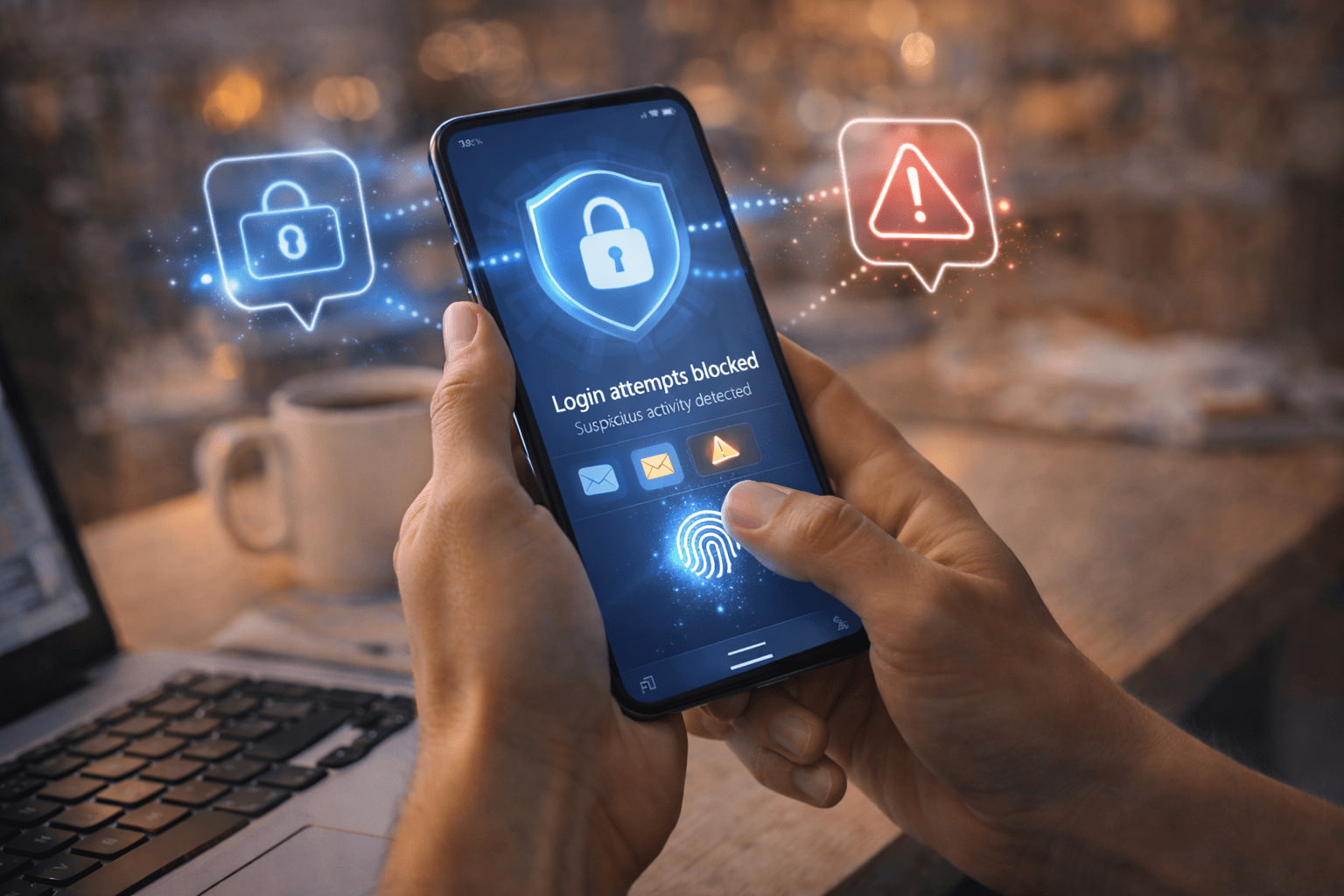
Digital security has become a daily concern for ordinary people. Online banking, social media, shopping apps, and cloud services all require personal data, passwords, and constant connectivity. As digital activity grows, so do risks such as fraud, identity theft, and unauthorized access.
This is where Artificial Intelligence (AI) plays an essential role. AI does not eliminate risks entirely, but it helps detect threats faster, prevent common attacks, and protect users automatically, often without them even noticing. This article explains how AI improves digital security in everyday life in a clear and practical way.
Why Digital Security Is More Important Than Ever
Most people interact with digital systems dozens of times per day. Common activities include:
- Logging into accounts
- Making online payments
- Sharing personal information
- Using public or shared networks
Traditional security methods alone are no longer enough. AI adds an extra layer of protection by monitoring behavior and detecting unusual activity.
What AI Does in Digital Security
AI in digital security focuses on patterns and anomalies.
It helps by:
- Analyzing normal user behavior
- Detecting unusual actions
- Identifying potential threats in real time
- Responding quickly to risks
These processes usually run silently in the background.
AI and Password Protection
Passwords are still widely used, but AI helps make them safer.
Detecting Suspicious Login Attempts
AI systems can:
- Identify logins from unusual locations
- Detect abnormal login times
- Flag repeated failed attempts
This helps prevent unauthorized access.
Supporting Strong Authentication
AI works alongside:
- Two-factor authentication
- Biometric security
- Device recognition
Together, these tools strengthen account protection.
Artificial Intelligence in Fraud Detection
Financial fraud is one of the most common digital threats.
AI helps detect fraud by:
- Monitoring transaction patterns
- Identifying unusual purchases
- Blocking suspicious payments
This protects users from losses and reduces response time.
AI Protects Email and Messaging Platforms
Email remains a major attack vector.
AI-powered systems:
- Detect phishing attempts
- Filter spam messages
- Identify malicious links
This reduces the chance of users falling for scams.
AI in Online Shopping Security
E-commerce platforms use AI to protect both buyers and sellers.
AI helps by:
- Detecting fake accounts
- Preventing payment fraud
- Monitoring suspicious behavior
This improves trust in online shopping environments.
AI and Device Security
Devices such as smartphones and computers rely on AI for protection.
Malware Detection
AI can:
- Identify malicious software
- Detect unusual app behavior
- Block harmful processes
This improves device safety without manual scanning.
Automatic Security Updates
AI helps prioritize updates and patches that address the most critical risks.
Artificial Intelligence in Network Security
Networks are constantly exposed to threats.
AI systems:
- Monitor data traffic
- Detect abnormal patterns
- Identify potential attacks early
This helps protect users even on large or shared networks.
AI Helps Reduce Human Error
Many security issues happen due to simple mistakes.
AI reduces risk by:
- Warning users about unsafe actions
- Blocking suspicious downloads
- Highlighting risky behavior
This protects users even when they are distracted or inexperienced.
Privacy and Control in AI Security Systems
Some users worry about privacy when AI monitors behavior.
Reputable systems address this by:
- Analyzing patterns instead of personal content
- Encrypting data
- Offering transparency and control
Users can often review and adjust security settings.
What AI Does Not Replace in Digital Security
AI does not replace:
- User awareness
- Strong passwords
- Responsible online behavior
Security works best when AI and human caution work together.
How Ordinary People Benefit from AI Security Tools
For everyday users, AI means:
- Fewer security alerts
- Faster fraud detection
- Automatic protection
- Less technical effort
Most users benefit without needing technical knowledge.
Simple Habits That Work Well with AI Security
To improve security:
- Use unique passwords
- Enable multi-factor authentication
- Keep devices updated
- Pay attention to warnings
AI enhances these habits, it doesn’t replace them.
Artificial Intelligence Makes Digital Life Safer
Artificial Intelligence has become a silent guardian of digital life. By detecting threats early, preventing fraud, and reducing human error, AI makes everyday digital activities safer and less stressful.
For ordinary people, AI in digital security means peace of mind. It works quietly in the background, protecting accounts, devices, and data — allowing users to focus on their daily lives with more confidence and less worry.