
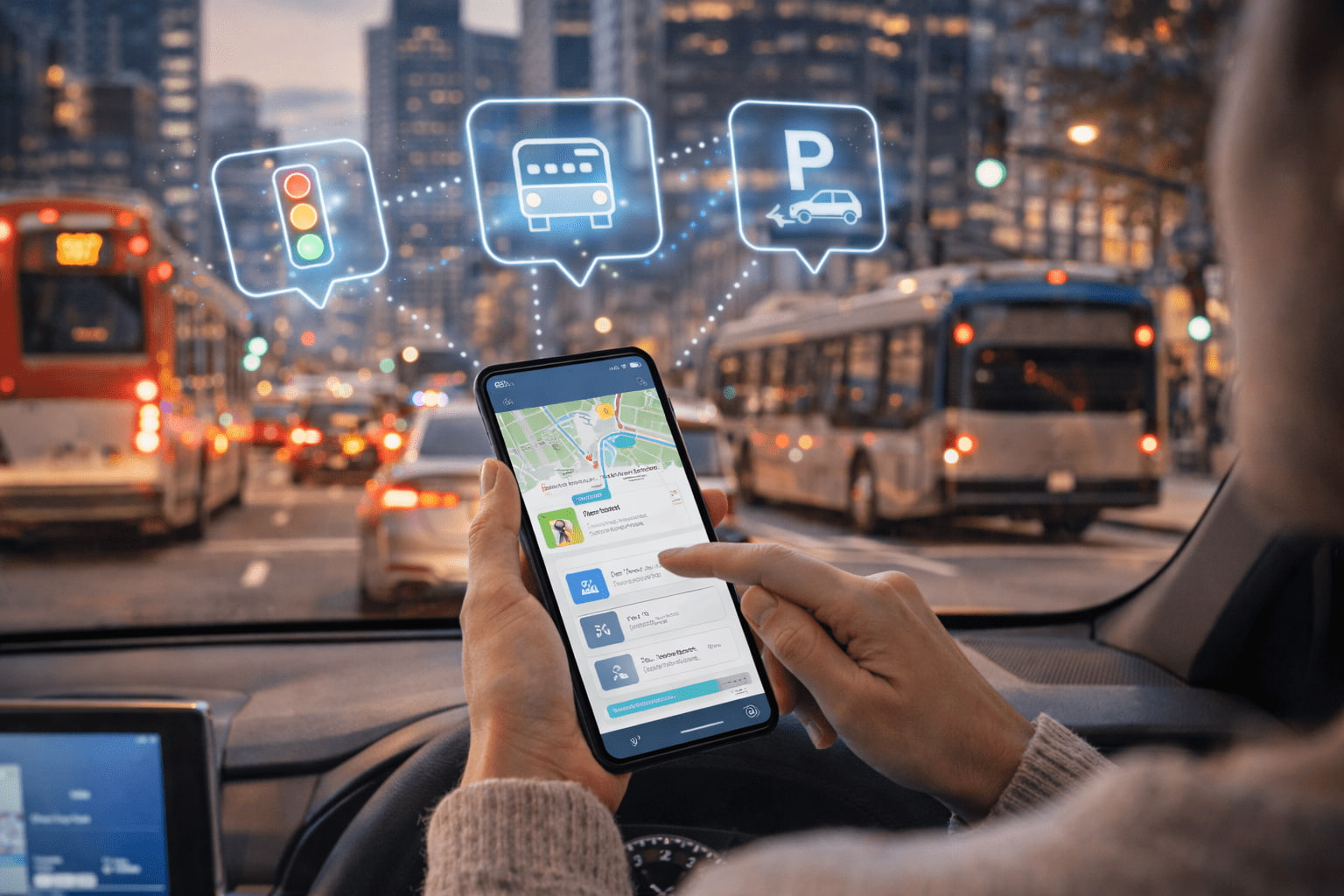
Moving around cities has become more complex as urban areas grow. Traffic congestion, delays, parking difficulties, and public transport coordination affect millions of people every day. Artificial Intelligence (AI) has been quietly improving urban transportation, helping ordinary people move more efficiently, safely, and comfortably.
AI does not replace drivers, public transport workers, or city planning. Instead, it optimizes systems, analyzes data, and supports better decisions, improving everyday mobility. This article explains how AI is used in urban transportation in simple and practical terms.
Why Urban Transportation Needs Improvement
Cities face daily mobility challenges such as:
- Traffic congestion
- Unpredictable travel times
- Limited parking
- Overcrowded public transport
Traditional systems struggle to adapt in real time. AI helps by analyzing large amounts of data and responding quickly to changing conditions.
What AI Means in Urban Mobility
In transportation, AI is used to:
- Analyze traffic patterns
- Predict demand
- Optimize routes and schedules
- Improve safety
Most of these processes happen behind the scenes and are invisible to users.
AI in Navigation and Route Planning
One of the most common ways people interact with AI in transportation is through navigation apps.
Real-Time Traffic Analysis
AI systems:
- Analyze data from thousands of vehicles
- Detect congestion, accidents, and delays
- Suggest alternative routes
This helps drivers and commuters save time daily.
Accurate Arrival Predictions
AI continuously updates estimated arrival times based on real-world conditions, improving planning and reliability.
Artificial Intelligence in Public Transportation
Public transport systems also benefit from AI.
Smart Scheduling
AI helps:
- Adjust bus and train schedules
- Predict peak hours
- Reduce waiting times
This improves service efficiency and passenger satisfaction.
Crowd Management
AI analyzes passenger flow to:
- Identify overcrowded areas
- Improve vehicle distribution
- Enhance safety during busy periods
AI Improves Traffic Signal Management
Traffic lights are increasingly managed by AI systems.
These systems:
- Adapt signal timing based on traffic flow
- Reduce unnecessary stops
- Improve overall traffic movement
This reduces congestion and fuel consumption.
Artificial Intelligence and Parking Solutions
Finding parking is a daily frustration in many cities.
AI-powered systems help by:
- Identifying available parking spots
- Guiding drivers to open spaces
- Reducing time spent searching
This improves traffic flow and reduces stress.
AI in Ride-Sharing and Mobility Services
Ride-sharing platforms rely heavily on AI.
AI helps by:
- Matching drivers and passengers efficiently
- Predicting demand
- Optimizing pickup and drop-off locations
This improves availability and reduces wait times.
AI Improves Road Safety
Safety is a key benefit of AI in transportation.
AI systems:
- Detect dangerous driving patterns
- Identify high-risk intersections
- Support collision prevention technologies
These tools reduce accidents and improve overall road safety.
AI and Environmental Impact
AI also supports sustainability.
By optimizing routes and reducing congestion, AI helps:
- Lower fuel consumption
- Reduce emissions
- Improve air quality
Small improvements across millions of trips have a large cumulative impact.
Everyday Benefits for Ordinary People
For everyday commuters, AI means:
- Shorter travel times
- More reliable schedules
- Less stress
- Better planning
Most users benefit from AI without even noticing it.
Common Concerns About AI in Transportation
Some people worry about:
- Data privacy
- Over-automation
- Loss of control
Modern systems address these concerns with transparency, user control, and human oversight.
AI Does Not Replace Human Judgment
AI supports transportation systems, but:
- Humans design and oversee systems
- Drivers remain responsible
- City planners make final decisions
AI provides information, not authority.
How Ordinary People Can Benefit More from AI Mobility Tools
To get the most from AI-powered transportation:
- Use real-time navigation tools
- Check transit updates
- Combine AI suggestions with personal knowledge
Balanced use leads to better mobility decisions.
Artificial Intelligence Makes Urban Movement Smarter
Artificial Intelligence is transforming urban transportation into something more responsive, efficient, and user-friendly. By analyzing data in real time and optimizing systems, AI helps cities move more smoothly.
For ordinary people, AI in transportation means less waiting, better routes, and safer journeys. It doesn’t change the destination — it makes the journey easier, more predictable, and less stressful.