
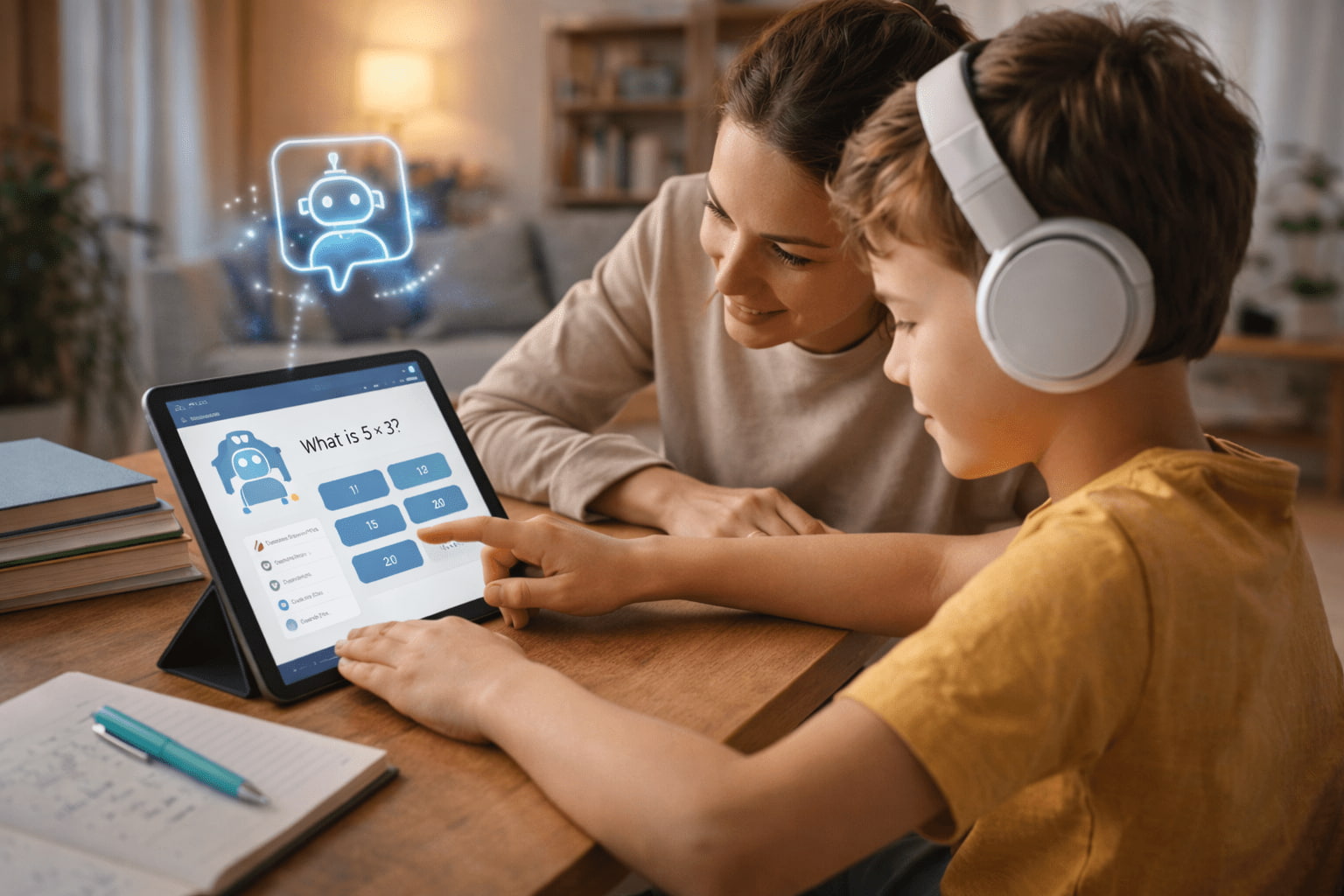
Artificial Intelligence is often associated with advanced technology or professional environments, but it is already present in basic education, supporting students, teachers, and families in simple and practical ways. For ordinary people, AI in education is not about replacing teachers or changing how children learn — it is about supporting learning, organization, and accessibility.
This article explains how Artificial Intelligence is used in basic education today, using clear examples that anyone can understand.
Why Education Is Using Artificial Intelligence
Education faces everyday challenges such as:
- Different learning speeds
- Limited teacher time
- Need for personalized support
- Organization of content and progress
AI helps address these challenges by offering support tools, not by replacing human interaction.
What AI Means in Basic Education
In basic education, AI usually appears as:
- Educational apps
- Learning platforms
- Digital tools for practice and review
These tools use AI to adapt content and provide feedback based on student behavior.
Personalized Learning for Students
One of the biggest benefits of AI is personalization.
Adapting to Learning Pace
AI-powered platforms can:
- Identify strengths and weaknesses
- Adjust difficulty levels
- Suggest additional practice
This helps students learn at their own pace without pressure.
Supporting Different Learning Styles
Some students learn better visually, others through repetition or practice. AI helps present content in multiple ways.
AI in Homework and Practice Activities
Homework is another area where AI supports learning.
AI tools can:
- Suggest exercises based on previous mistakes
- Provide instant feedback
- Help students review concepts
This reduces frustration and reinforces understanding.
Artificial Intelligence Supports Teachers
AI does not replace teachers — it supports them.
Reducing Repetitive Tasks
AI helps teachers by:
- Correcting basic exercises
- Tracking student progress
- Organizing grades and reports
This frees up time for teaching and personal attention.
Identifying Learning Gaps
AI systems can highlight patterns, showing where many students struggle, helping teachers adjust lessons.
AI Helps Parents Follow Learning Progress
Parents often want to support education but lack time or technical knowledge.
AI-powered platforms can:
- Show progress summaries
- Highlight areas needing attention
- Send reminders and updates
This improves communication between school and home.
AI in Language Learning
Language learning is one of the most common uses of AI.
AI helps by:
- Correcting pronunciation
- Adjusting vocabulary difficulty
- Offering personalized practice
This makes learning new languages more accessible and interactive.
Accessibility and Inclusion in Education
AI plays an important role in inclusive education.
Examples include:
- Text-to-speech tools
- Speech-to-text assistance
- Adaptive learning interfaces
These tools help students with different needs participate more effectively.
AI Does Not Replace Human Teaching
A common concern is that AI might replace teachers.
In reality:
- AI supports learning tasks
- Teachers guide, motivate, and inspire
- Human interaction remains essential
AI handles structure; teachers handle understanding and empathy.
Common Concerns About AI in Education
Some parents worry about:
- Screen time
- Data privacy
- Over-reliance on technology
Responsible platforms address these issues with:
- Usage limits
- Parental controls
- Transparent data policies
Simple Examples of AI in Everyday School Life
AI is already present in:
- Online learning platforms
- Educational games
- Reading and math apps
- Digital homework tools
Most students and parents use AI without even noticing.
How Ordinary Families Can Use AI in Education Safely
To use AI tools responsibly:
- Choose age-appropriate platforms
- Balance screen time with offline learning
- Use AI as support, not replacement
Awareness ensures positive outcomes.
Artificial Intelligence Makes Learning More Accessible
Artificial Intelligence in basic education is not about complexity or technology for its own sake. It is about making learning clearer, more organized, and more inclusive.
For ordinary people, AI helps students learn with confidence, supports teachers in daily tasks, and allows parents to stay informed. When used responsibly, AI becomes a quiet helper that improves education without changing its human core.