
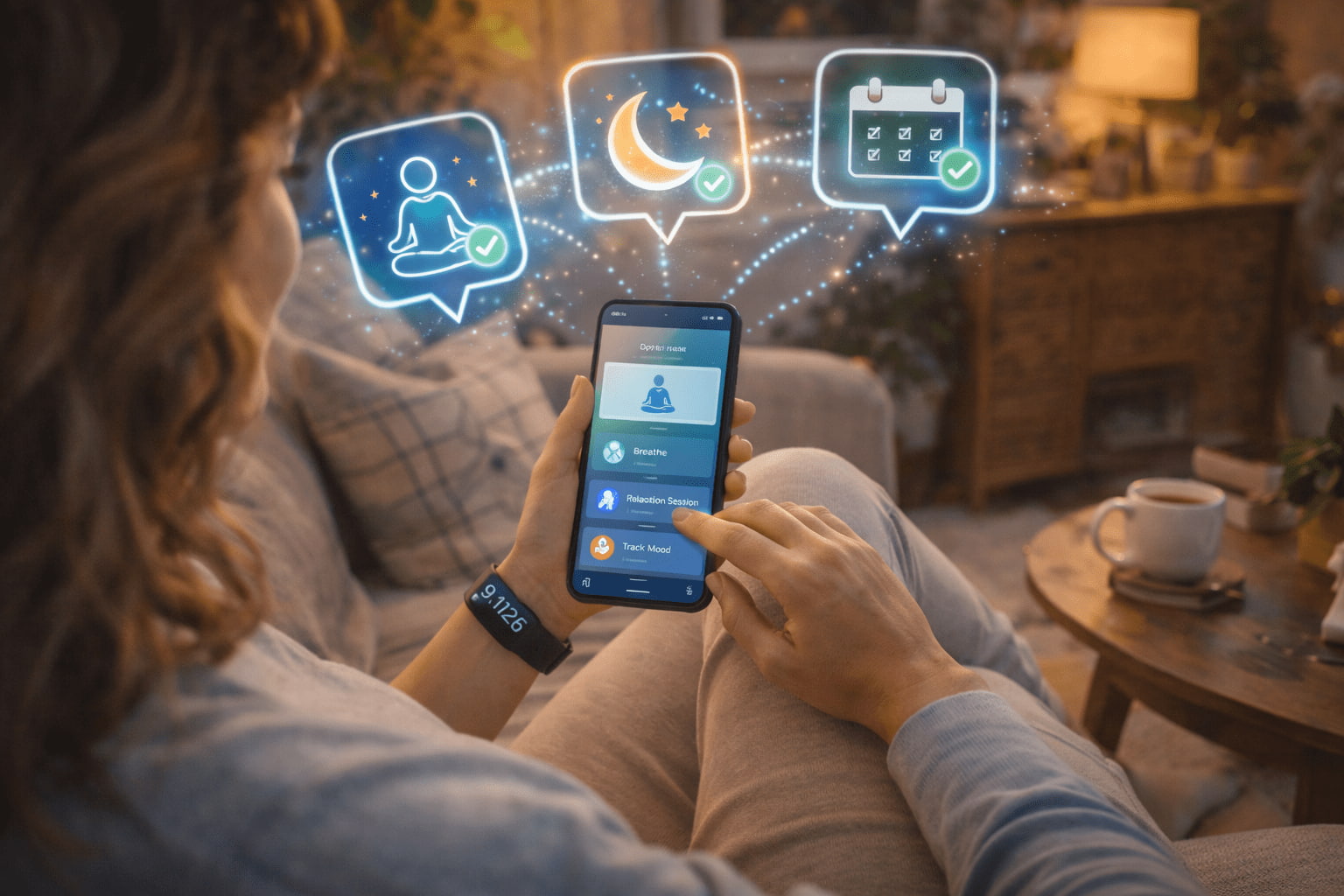
Stress has become a common part of modern life. Work pressure, constant notifications, financial concerns, lack of time, and information overload affect millions of people every day. While stress is not new, its intensity and frequency have increased. Artificial Intelligence (AI) is now playing a quiet but meaningful role in helping ordinary people manage stress and improve overall well-being.
AI does not replace professional care, therapy, or human support. Instead, it acts as a supportive tool, helping people understand habits, organize routines, reduce mental overload, and build healthier daily patterns. This article explains how Artificial Intelligence helps manage stress and well-being in practical, everyday ways.
Why Managing Stress Has Become More Difficult
Many people struggle with stress not because of a single problem, but because of accumulation.
Common stress factors include:
- Too many daily decisions
- Constant digital interruptions
- Poor sleep routines
- Lack of time for rest
- Difficulty organizing tasks
AI helps by reducing friction, simplifying choices, and creating structure.
What AI Means in the Context of Well-Being
In well-being tools, AI is used to:
- Analyze patterns and habits
- Offer personalized suggestions
- Provide reminders and guidance
- Reduce cognitive overload
These systems usually work quietly and adapt over time.
AI Helps Create Healthier Daily Routines
Routines play a major role in stress management.
Smart Reminders and Scheduling
AI-powered tools can:
- Suggest balanced schedules
- Remind users to take breaks
- Encourage consistent sleep routines
By creating predictability, AI reduces daily anxiety.
Habit Formation Support
AI helps users:
- Track habits automatically
- Identify patterns that increase stress
- Reinforce positive behaviors
This makes habit-building more achievable.
Artificial Intelligence Supports Better Sleep
Sleep quality is closely connected to stress levels.
AI helps improve sleep by:
- Analyzing sleep patterns
- Suggesting better sleep schedules
- Reducing late-night notifications
- Encouraging consistent routines
Better sleep often leads to improved mood and focus.
AI Helps Reduce Information Overload
Constant exposure to information increases mental fatigue.
AI helps by:
- Prioritizing notifications
- Filtering irrelevant content
- Highlighting important messages
This reduces interruptions and helps people stay focused.
AI-Assisted Mindfulness and Relaxation Tools
Many people use AI-powered tools for relaxation.
Guided Relaxation and Breathing
AI apps can:
- Suggest breathing exercises
- Guide short relaxation sessions
- Adapt exercises based on usage patterns
These tools are accessible and easy to use.
Stress Check-Ins
Some tools allow users to:
- Track mood changes
- Identify stress triggers
- Receive simple coping suggestions
This increases self-awareness without pressure.
AI Helps with Time and Task Management
Poor organization is a major stress factor.
AI-powered planning tools help by:
- Prioritizing tasks
- Breaking large tasks into steps
- Reducing decision fatigue
When tasks feel manageable, stress decreases.
Artificial Intelligence and Physical Activity
Movement plays an important role in mental well-being.
AI helps support activity by:
- Tracking movement patterns
- Suggesting realistic activity goals
- Encouraging gentle consistency
Small, regular movement often improves mood and reduces tension.
AI Helps Balance Work and Personal Life
Blurred boundaries increase stress.
AI supports balance by:
- Suggesting focus periods
- Encouraging breaks
- Helping users disconnect at certain times
This helps protect personal time and mental energy.
Emotional Awareness Without Judgment
AI tools provide a non-judgmental environment.
They:
- Don’t criticize
- Don’t pressure
- Allow private reflection
This makes it easier for people to engage with well-being tools regularly.
What AI Does Not Replace in Mental Health
AI is a support tool, not a substitute.
It does not replace:
- Therapists or doctors
- Human empathy
- Professional diagnosis
For serious or persistent issues, professional help is essential.
Common Concerns About AI and Well-Being Tools
Some people worry about:
- Privacy
- Over-reliance on apps
- Emotional detachment
Responsible tools address these concerns with:
- Clear privacy controls
- Optional features
- User-controlled settings
Users remain in control.
How Ordinary People Can Use AI for Stress Management
Simple ways to start include:
- Using reminders for breaks
- Tracking sleep or routines
- Reducing notification overload
- Using short relaxation exercises
Consistency matters more than complexity.
Small Changes Make a Big Difference
AI works best when it supports small, sustainable changes.
By:
- Reducing mental clutter
- Supporting routines
- Improving awareness
AI helps people feel more in control of their day.
Artificial Intelligence Supports Calm, Not Perfection
Artificial Intelligence does not eliminate stress from life. What it does is help reduce unnecessary pressure, organize daily demands, and support healthier habits.
For ordinary people, AI in stress management is not about fixing everything. It is about creating space to breathe, think, and rest in a busy world. Used thoughtfully, AI becomes a quiet partner in well-being — helping people navigate daily life with more balance, clarity, and calm